
The debilitating health consequences of subscribing to Western Ideals
Credit: Slant
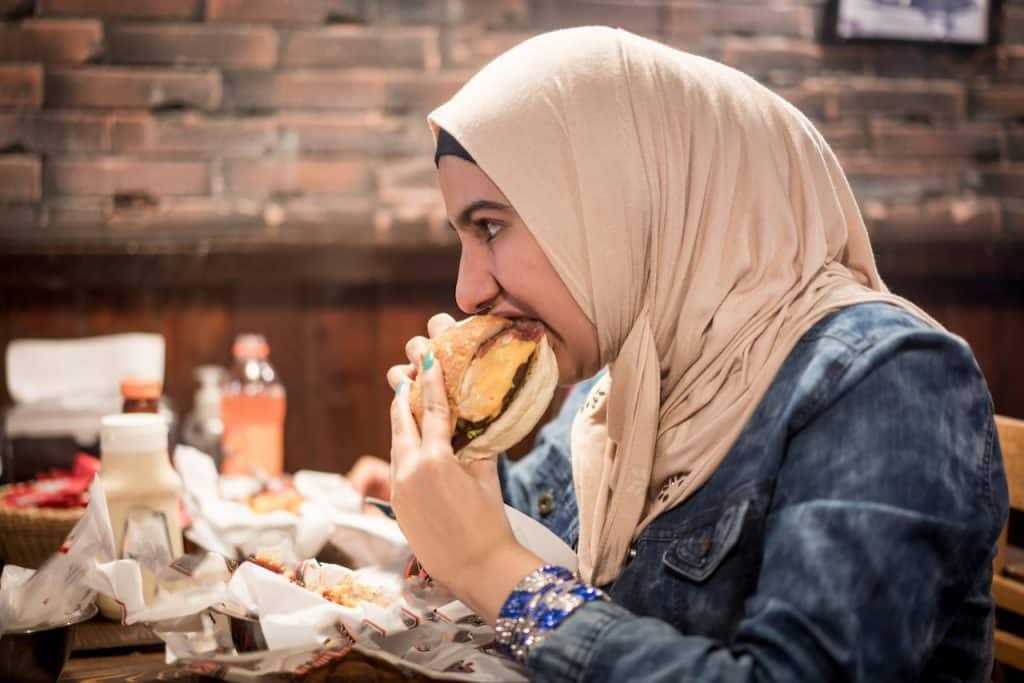
For centuries, food has played a vital role in Arab culture, serving not just as sustenance but also as a central focus of social gatherings and celebrations. Similar to many Mediterranean countries, shared meals are common, fruitful occasions for family and community bonding. The culinary traditions of the Arab world are incredibly diverse, reflecting the unique geographic and climatic conditions across the region. From the rich stews and tagines of Morocco to the flavorful kebabs and mezze of Lebanon, Arab cuisine is renowned for its aromatic spices, fresh ingredients, and distinct regional variations. While these rich foods continue to grace the tables of Arab dining rooms, they face stiff competition from the toxic fare produced by American fast-food giants.
Over the past fifty years, the growing influence of Western culture has done much to modify traditional eating habits of Jordan and the six Gulf Cooperation Council (GCC) countries: Saudi Arabia, the United Arab Emirates (UAE), Qatar, Kuwait, Bahrain, and Oman. Like other countries eager to jump on the corporate American gravy train, Arab nations have agreed to establish a number of fast-food franchise locations throughout the Gulf region—eat-in or drive-through hotspots that are now an integral part of Arab culture and dining experience. From Kuwait to Bahrain, the following is a list of fast-food operations dotting the Middle Eastern landscape:
- McDonald’s
- Burger King
- KFC
- Pizza Hut
- Hardee’s
- Domino’s
- Dunkin’ Donuts
The High Cost of Convenience

Fast-food delivery worker. Credit: Lovin’ Doha
Take Doha, for example, the capital city of Qatar. Here, fast-food culture is widespread, with many restaurants offering delivery services catering to busy lifestyles. The residents of Doha frequently order breakfast, lunch, and dinner from American fast-food chains, often using mobile apps or online platforms. Business is especially busy during the scorching summer months. From May to September, when temperatures range between 38.2°C (100.8°F) and 41.5°C (106.7°F), Doha families and office workers opt to stay indoors and order take-out.
In 2024, Qatari residents spent a whopping 5.2 billion Qatari riyal (QR) on food delivery, which translates to $1,428,571,428.57. In a total population of 3,162,110, that comes out to an annual delivery cost of roughly $451 per person.
An Even Higher Cost: The Damaging Health Consequences
Qatar has one of the highest rates of diabetes globally, particularly type 2 diabetes mellitus (T2DM). The prevalence among Qataris aged 20 to 79 years is estimated at 17.8%. This high rate is attributed to several risk factors, including obesity, physical inactivity, and unhealthy dietary habits.
Weill Cornell Medicine in Qatar (WCM-Q), the first American medical school established outside the United States, is reporting:
Qatar faces a significant burden of diabetes, with a projected increase in prevalence from 17.8% (37,179 persons) in 2023 to 29.5% (84,516 persons) by 2050 among adult Qataris aged 20-79 years. Obesity is the main driver of the diabetes epidemic in Qatar, accounting for 57.5% of diabetes cases. Diabetes expenditure is expected to reach nearly one-third of national health expenditure by 2050 [emphasis added].
According to Scientific Research, Qatar ranks 5th in the top 10 Middle Eastern countries with the highest rate of diabetes:
1) Kuwait – 24.9%; 2) Saudi Arabia – 20.0%; 3) Bahrain – 19.9%;
4) UAE – 19.2%; 5) Qatar – 20.2%; 6) Lebanon – 20.2%; 7) Oman – 15.0%; 8) Jordan – 15.0%; 9) Iraq – 14.0%; 10) Egypt – 10.0%
Processed Foods: A Dream Come True for American Stent Makers
The Qatar stents market, valued at USD 50 million, is growing due to increasing Cardio Vascular Disease (CVD) prevalence, tech innovations like bioresorbable stents, and hospital expansions in Doha and other regions.
The Qatar stents market is characterized by a dynamic mix of regional and international players. These are large medical establishments that have been raking it in on the backs of Qatari residents who have allowed themselves to gorge on popular Western brand names. Some of the leading American participants in the stent space include Boston Scientific Corporation, Abbott Laboratories, Johnson & Johnson (Biosense Webster/Cordis), Cook Medical LLC, Cardinal Health, Inc., Merit Medical Systems, Inc., and Stryker Corporation.
Complicit in the proliferation and use of stents are none other than the Qatari medical authorities. A comprehensive report published by Ken Research details stent requirements mandated by the Qatari government:
In 2023, the Qatari government implemented the “Drug-Eluting Stents Mandate for Public Hospitals,” issued by the Ministry of Public Health, Qatar, requiring the use of drug-eluting stents in all public hospitals for coronary interventions. This regulation mandates compliance with international standards for stent selection and aims to enhance patient care, reduce the incidence of restenosis, and improve overall health outcomes. Hospitals must ensure procurement from approved suppliers and maintain procedural documentation for regulatory audits.
If the Qatari government were to erect a monument similar to the American Statue of Liberty, an associated inscription might read: Give me your tired, hungry, and sick diabetics and we will light a lamp above our golden operating tables and go to work.
Here’s the Shocker

Coronary stent. Credit: Cardiovascular Business
The Lown Institute, a nonpartisan think tank “advocating for a just and caring health system,” reported on the dangers of coronary stents in a 2023 press release:
Across all hospitals, Lown estimates that more than one-in-five stents were placed unnecessarily in Medicare patients from 2019 to 2021, at a cost of $2.44 billion.
“When physicians continue a practice despite the evidence against it, it becomes more dangerous than useful.” said Dr. Vikas Saini, a cardiologist and president of the Lown Institute. “The overuse of stents is incredibly wasteful and puts hundreds of thousands of patients in harm’s way.”
Possible complications from the procedure include tear or perforation of the coronary artery, infection or bleeding at the catheter site, blood clots that can lead to stroke or heart attack, and kidney damage from the dye or contrast.
Coda
The GCC nations have bent over backward to accommodate the United States, providing the US with land for military bases and infrastructure support in exchange for oil drilling and refining technology, the agreement to trade oil using US dollars, and military protection. These are service economies, slave states ruled by ruthless dictators who serve wealthy Arab elites who have sold their souls to Western powers. In doing so, they have, at a great cost, allowed toxic foods to enter their food supply, providing little to no nutritional value to consumers who are now faced with astronomical medical bills like their unhealthy, drug-addicted counterparts in America.
The American military defense that these countries have relied on, and empowered them for years, has proven to be a façade, evidenced by the recent Iranian missile strikes wreaking havoc in Qutar, Bahrain, the UAE, and other US military outposts across the Gulf Coast region of the Middle East.
What will happen to these service economies and their empty billionaire leaders when the Strait of Hormuz is completely shut down and their cities teeming with glittering zillion-dollar hotels, restaurants, and estates are turned into high-end bomb shelters, no longer the fashionable go-to destination for wealthy actors, sports figures, fashion designers, and celebrity wannabes?