
Back in the early to mid-2000s, my interest in food production prompted me to secure certifications in horticulture, composting, and soil management. It was then that I first learned about glyphosate, the active ingredient in the toxic herbicide Roundup.
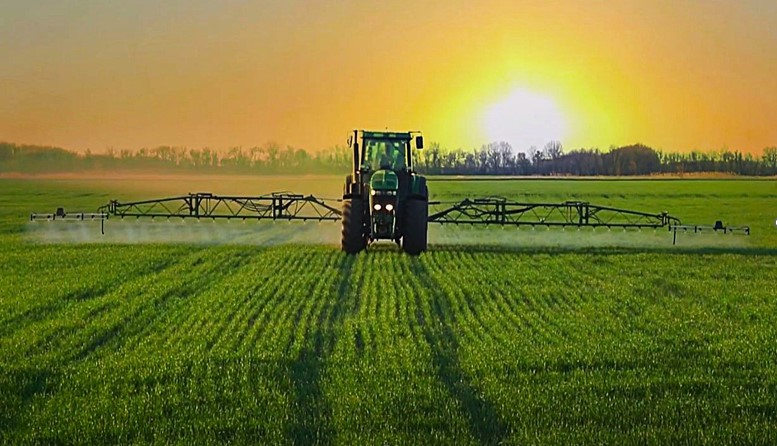
Credit: The Environmental Working Group
A report published by “World Animal Protection US” revealed:
Wildlife and farmed animals are both suffering on a massive scale, and in many cases the culprit is the same: toxic agricultural pesticide use. When most people grab a burger, the last thing they’re thinking about is pesticides. But meat production is a driving force behind the use of massive amounts of deadly pesticides in agriculture. In 2018, the most recent year with full data available, an estimated 235,976,274—nearly 1/4 billion—pounds of herbicides and insecticides were applied in the US just to the corn and soybeans grown for farmed animal feed [emphasis added.]
The Effects on Farming Communities
Urban centers like New York and Los Angeles have long been considered the most polluted cities in the United States. Sadly, the advent of large-scale industrial agriculture and the growing use of toxic pesticides to increase crop yields and bolster profits is rapidly changing this assumption.
The long-term effects of glyphosate and other chemical toxins on farming communities have been devastating. Probably the most glaring example of this is Iowa’s Palo Alto County where glyphosate is used to facilitate the production of corn and soybeans, the county’s two major crops used for animal feed and the production of ethanol.
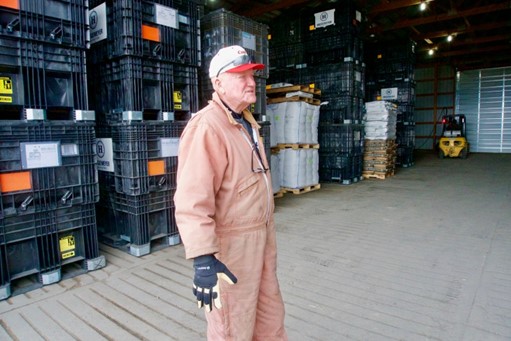
Linus Solberg, Palo Alto County, Iowa, farmer and county supervisor, has asked area health authorities for assistance to understand the sources for disease and reducing risks. Credit: Leith Schneider, The New Lede
In 2024, Investigate Midwest published an article titled “An Iowa Farm County Seeks Answers to Cancer Rate 50% Higher than National Average”:
Concerns about connections between the farm pollutants and cancer have been mounting, particularly in Palo Alto County, which had the highest incidence of cancer of any county in the state and the second-highest incidence of cancer among all U.S. counties, with 83 new cases of cancer on average each year in a population of 8,996, according to a 2023 report by US News.
The five-year incidence rate for cancer in Palo Alto County is 658.1, far higher than the national five-year average of 442 new cancer cases reported for every 100,000 people, according to the National Cancer Institute.
Lawsuits Abound
The “Lawsuit Information Center” reported:
As of October 2024, Monsanto [the company responsible for producing Roundup] has reached settlement agreements in nearly 100,000 Roundup lawsuits. Monsanto paid approximately $11 billion. Bayer has accomplished this by negotiating block settlement arrangements with plaintiffs’ lawyers who have significant cases in the litigation … and by settling with plaintiffs before trial.
Although these settlements account for nearly two-thirds of all Roundup claims, Monsanto estimates that 54,000 active Roundup lawsuits remain. Most lawsuits have been filed in state court, but over 4,000 claims in the MDL [multidistrict litigation] Roundup class action lawsuit are still pending in California.
—————————————————————————————————————
In his 2019 article “Geo-Economics and Geo-Politics Drive Successive Eras of Predatory Globalization and Social Engineering – Historical emergence of climate change, gender equity, and anti-racism as State doctrines,” Canadian researcher Denis Rancourt explained that accelerated globalization and USA corporate deregulation following the 1990s dissolution of the Soviet Union (USSR) coincided with a surge in agricultural use of glyphosate and the initiation of several unprecedented chronic disease epidemics, which have only intensified to this day.
—————————————————————————————————————
Glyphosate has been linked to cancer, Parkinson’s disease, liver and kidney damage, and endocrine, reproductive, and digestive issues. Despite the overwhelming evidence detailing the harmful effects of glyphosate on humans and animals, the US Environmental Protection Agency (EPA) and other government agencies continue to claim that glyphosate is safe for consumption “up to the established tolerances.”
Call me crazy, but I can’t imagine what the “established tolerances” might be for a toxic herbicide, or what sane and rational human being might find any level of toxicity acceptable for human and animal consumption. ¯\_(ツ)_/¯
For more information about glyphosate and other cancer-causing pesticides affecting our meat, produce, and other food supplies visit article “What’s IN the Beef?