
Decades of hardcore feminist ideology has culminated in new generations of angry and lonely young women who feel shortchanged and left facing a bleak future. How did this happen and who is responsible?

Credit: Rohappy
The women’s suffrage movement that took place in the United States over the course of the late-19th and early-20th centuries, commonly referred to as first-wave feminism, gave birth to new vistas of sexual freedom and ushered in overdue rights for women including the right to vote, the right to run for office, and the right to open a bank account. The suffrage movement also set the stage for second- and third-wave feminism that fermented the carefully engineered hatred of men, the debilitating consequences of which the current generation of young men and women are experiencing today with little historical awareness or hope for change.
Feminism’s Dark History: A Brief Look
In modern society, it is widely assumed that women’s liberation was a good thing, an organic grass-roots movement in the struggle for social justice on a virtuous quest to free women from an oppressive and evil patriarchy. In her controversial book, Occult Feminism: The Secret History of Women’s Liberation, author Rachel Wilson argues that while feminism liberated and elevated women in areas of society, it also presented them with a new set of oppressive shackles that had been worn by working-class men long before early feminists like Elizabeth Cady Stanton and Lucretia Mott held up their first protest sign.
The women’s movement, conceived and spearheaded by mostly wealthy, white, privileged women who had never scrubbed floors or worked in a factory, had managed to destabilize the fundamental structures that afforded mostly working-class women the stability, security, and purpose they once valued as mothers and homemakers.
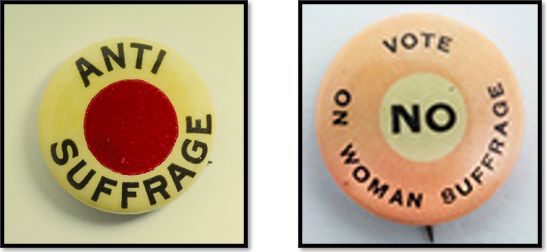
After reading Wilson’s book, I was amazed to learned that, contrary to popular belief, the early women’s movement was not popular with many women during that period.
Credit: The Library of Congress
In this regard, Wilson writes:
Suffrage was so unpopular with women in 1895, that the state of Massachusetts asked women of voting age whether they wanted suffrage. Of the 575,000 eligible women voters, only 22,204 voted yes. That is only 3.8%. So, if the female populace at large was NOT demanding the right to vote as we are always told they were, how was such a thing passed? Well, they say that if you want to know who or what is behind something, follow the money.
I was also amazed, but not the least bit surprised, to learn that the suffragettes were funded in large part by wealthy financial magnates like the Vanderbilts. They and other powerful elites knew all too well that voting rights for women would eventually lead to the breakdown of the family unit and encourage women to enter the workforce where they would earn wages and consume goods and services, boost the gross domestic national product (GDP), and further line the pockets of Wall Street industrialists.
“You’ve Come A Long Way, Baby”

Torch of Freedom. Credit: Ege Gür
Employing the use of newly conceived psychological tactics accompanied by powerful campaign slogans and images, women were easily manipulated and transformed into liberated wage slaves for corporations and tax-revenue cash cows for governments.
In the early 20th century, it was considered unladylike and socially unacceptable for women to smoke in public. This posed a huge problem for tobacco companies who were salivating at the prospect of marketing cigarettes to women and increasing their consumer base by a whopping 50 percent. Stumped, but not without hope, they turned to Edward Bernays, referred to as the father of public relations who was also the American nephew of Sigmund Freud. Utilizing his uncle’s groundbreaking theories and understanding of the subconscious, Bernays—in the true spirt of vulture capitalism—had figured out how to manipulate the masses by employing a technique similar to what might be referred to today as “social engineering.” He contended that to effectively change public perception, one needed to identify and appeal to their irrational emotions. On a mission to understand what cigarettes meant to women, Bernays contacted Dr. A.A. Brill, a leading psychoanalyst in New York at that time. Brill told Bernays that cigarettes were a symbol of the penis, and male sexual power, and that if he could find a way to connect cigarettes with the idea of challenging male power, women would smoke because they would then have their own penises. That’s all Bernays needed to hear.
At an annual New York Easter Day parade attended by thousands, Bernays staged an event that would forever erase the taboo of women smoking in public and establish a groundbreaking technique as a means of altering public perceptions.
The Scheme: Bernays organized a group of young debutants to hide cigarettes under their clothes. The women were to join the parade, and when given a signal from him, they were to light their cigarettes and defiantly start puffing away. Bernays then informed the press that he had heard that a group of suffragettes were planning an outrageous public spectacle by lighting up “torches of freedom.”
As planned, a gaggle of news-hungry photographers were right there to capture the moment. The outcry was overwhelming. Almost overnight, the phrase “torches of freedom” (a rational catchphrase validating an irrational and destructive behavior) had become a popular marketing slogan and been added to the public lexicon, officially taking up residency in the consciousness of both men and women.
Mission accomplished. The image of young women—debutants no less—smoking in public, a symbol analogous to the proud and majestic torch-bearing Statue of Liberty, undoubtedly meant that anybody who believed in equality for women pretty much had to support women’s rights and, by association, their right to smoke in public.
The Result: Cigarette sales in the United States and other countries around the world began to rise and profits for tobacco companies soared.
In the 1960s, some forty-plus years after Edward Bernays’s historical experiment, advertisers continued to capitalize on the concept of equating women’s smoking habits with justice, equality, and empowerment. A commercial for Virginia Slims—elegantly crafted cancer sticks specifically designed for “women only”—was introduced to the public with the tagline “You’ve Come a Long Way, Baby.”
After that spot hit the airwaves, cartons of Virginia Slims flew off the shelves and profits increased big-time along with increased cases of lung cancer.
Second-Wave Feminism and the CIA’s Dream Gal in Langley

Gloria Steinem, feminist and CIA Operative, 1976. Credit: Redstockings.
One of the leading feminist voices to emerge from the 1960s was Gloria Steinem who many would argue did more to subvert and discredit the women’s movement than empower it.
A self-promoting careerist, Steinem understood power and wanted to get as close to it as possible. Fashionable and well-spoken, Steinem had all the right gear, the perfect CIA asset who had been working with the agency from 1958 to at least 1968 or 1969.
In an interview circa the late 60s, Steinem described her time working as a CIA operative and expressed her discontent working with private sector organizations like the Ford Foundation which she considered “restricting.” When the interviewer asked, “You mean to say it was easier for you to work for the CIA than a private organization?” Steinem responded:
That’s right. And the reason I think that comes as a surprise as it did to me at the time. I mean, I had the conventional liberals’ view of the CIA as the right-wing incendiary group. And I was amazed to discover that this was far from the case, that they were enlightened, liberal, nonpartisan activists of the sort who characterized the Kennedy administration, for instance.
When I first heard this interview, I thought for sure Ms. Steinem had been experimenting with lysergic acid diethylamide, the popular 60s hallucinogen known as LSD. Was she talking about the same “enlightened, liberal, nonpartisan activists” that had overthrown dozens of democratically elected governments around the world—the same kumbaya peace-loving folks who were responsible for more deaths and human suffering than the bubonic plague? Not to mention the CIA’s involvement in the 1963 assassination of President JFK who fired CIA chief Allen Dulles in 1961 after the CIA’s Bay of Pigs debacle and attempted to restructure the agency along with his brother, Attorney General Robert F. Kennedy, who had met a similar fate in June 1968.
The first revelations of Gloria Steinem’s relationship with the CIA appeared in a 1967 New York Times article (CIA Subsidized Festival Trips) revealing that Steinem had a part in launching a CIA front group which was called the Independent Research Service. Four years later, Steinem cofounded Ms., a highly promoted American feminist magazine which was said to have also received CIA funding.
In a 1975 article titled Radical Feminists Won’t Be MSled, journalist Gabrielle Schang wrote that just prior to the NYT article:
. . . Ramparts magazine had disclosed that the organization was CIA funded. The purpose of the Independent Research Service seems to have been to subvert communist-minded youths, on an international basis.
The supposedly “Independent” Research Service was in fact totally dependent on the CIA. It is believed to have been formed in response to the Communist World Youth Festivals occurring throughout the 1950s and 1960s.
Gloria Marie Steinem: March 25, 1934—September 2, 2026 (aged 92)
Shortly after the death of Gloria Steinem, the corporate, state-sponsored mainstream media (MSM) news networks flooded the airways, touting the accomplishments of Steinem, showering her life with praises. Not one word was uttered about Steinem’s despicable involvement with the deep state’s intelligence apparatus.
[0:26] Gloria Steinem was a journalist, political activist, and above all, an outspoken trailblazer of the women’s rights movement in the 60s and 70s.
Born in Toledo, Ohio in 1934, Steinem dedicated her life to breaking barriers, inspiring women to fight for change and take risks.
[2:08] Through it all staying focused on her journey towards social justice and fighting for women’s rights and equality.
Gloria Marie Steinem, R.I.P. If you ended up in a destination commonly referred to as hell, one would only hope that you are afforded the same rights, justice, and treatment as your CIA male counterparts residing in the same location.
Contradictions in Sexual Liberation
As a young man growing up in the late 60s and 70s, I had experienced the sexual revolution firsthand. With the help of birth control, women had broken away from the confining sexual oppression that shrouded the 1950s and were joyfully engaging in sex, totally unencumber by religious taboos and sign-on-the-dotted-line bureaucratic commitments. It was a wonderful time, and sex was great for both men and women who were doing it in bedrooms, in cars, and on the ceilings. It also afforded young people the opportunity to experience a level of intimacy beyond the parameters of their parents.
By the mid- to late-70s I noticed that something had changed—feminist ideology was ramping up and permeating the culture. Men were being targeted and viewed as oppressors—creeps who were the cause of women’s problems who had been getting away with free sex. Retiredprofessor Janice Fiamengo from the University of Ottawa unravels the historical context and the glaring contradictions associated with modern feminism and women’s “sexual liberation.”
Women’s liberation, even women’s sexual liberation— they were quite explicit about that— was a good thing because women’s sexuality and women’s nature was seen as pure and therefore it could never cause harm at the social level. Whereas male sexuality was never seen as a good, it was often vilified and even pathologized as sick and destructive. Now how that would work out in a situation of free love. I don’t know when one person’s sexuality is seen as depraved and abusive and the others’ is seen as good. So, feminism always had that kind of fundamental contradiction. It wanted to free women, but it didn’t really want to free men. And in fact, it wanted to control men even more rigorously than they were already controlled within the laws that governed marriage, in which male freedom was certainly not upheld. Men owed the women they married economic support for their entire lives even if the woman left them. So, there was always that contradiction.
Manufacturing Confidence: A Disaster for Generations of Young Women
In an illuminating article (“The Cost of Teaching Girls That Assertiveness Is Confidence”), Dr. Hannah Spier writes:
For fifty years, psychology and education treated female accommodation as a defect to be corrected. We rarely asked what that intervention would do to personality, relationships, and family life.
For decades, schools and psychologists have measured the progress of girls by how loudly they speak, how quickly they assert themselves, and how firmly they refuse to yield. We treated this forced increase in extroversion as undeniable proof of rising self-esteem, rarely asking what the long-term cost to their interpersonal functioning might be.
Indoctrination
For the past 35 years, young girls have been weaned on a relentless diet of assertiveness brainwashing with little understanding or room for self-examination.
In this regard, Dr. Spier notes:
From her earliest years, a girl born in 1990 navigates a cultural environment that systematically redefines psychological health as the refusal to accommodate others. At five years old, Disney programming teaches her that confidence requires defiance, while early schooling instructs her to prioritize self-assertion. By the time she reaches adulthood, therapeutic language and social media platforms instruct her that compromise is a form of people-pleasing and that a simple refusal is a complete sentence.
These interventions point in a deliberate psychological direction established by feminist psychologists in the 1960s and 1970s, who diagnosed female agreeableness not as a natural temperament, but as a consequence of oppressive social conditioning.
The End Results
Consequently, increasing assertiveness came to be treated as an absolute net benefit for every girl, effectively equating a cluster of extroverted traits (speaking first, occupying attention, and resisting influence) with self-esteem and psychological health. The culture became obsessed with measuring this single behavioral trait, cementing the idea that empowerment requires discarding traditionally feminine traits in favor of direct action and refusal.
Popular media absorbed and broadcasted this psychological shift with reckless abandon, showing emotional detachment and sarcasm as markers of high intelligence. The truly smart go-getting, hyper-competent and ambitious female leads were increasingly characterized by their outright rudeness, often screaming and swearing. Television and film normalized female protagonists who wielded domination, manipulation, and emotional invulnerability, effectively teaching audiences that a woman’s intellectual superiority is best demonstrated through contempt for others. The overarching aesthetic transformed emotional distance and deadpan cruelty into markers of strength, subtly instructing girls that they prove their intelligence and independence by operating without needing approval from others.
Establishing Permanent Enemies
The resulting worldview assumes that women are permanently surrounded by individuals waiting to take advantage of any interpersonal softness they display. Consequently, the culture frames the safe woman as the hardened woman: a figure who is skeptical, unyielding, difficult to shame, and exceptionally quick to interpret any necessary accommodation as a form of self-betrayal. Teaching girls to approach relationships as though vulnerability predictably invites exploitation completely fails to prepare them for functioning intimacy. Instead, it prepares them for permanent negotiation with an enemy, ignoring the reality that men also protect women, make sacrifices for them, and organize their behavior around winning female approval [emphasis added].
The Death of Attraction
In my 20s and 30s, I was wildly attracted to women, their beauty, feminine outlook, and emotional intelligence. Like many of my buddies back in the day, I couldn’t wait to get off work and hit the bars, clubs, and music venues to meet and date women. Today, men are simply not approaching women. For me this is almost inconceivable, but it is in fact a reality. Young men are opting to be alone, comfortable with hanging out with their buds or working on self-improvement and independent projects. Collectively, they are maxed out on the hate and demonization directed at men, a consequence of years of feminist dogma.
As one popular content creator explained:
[0:20 – 0:51] Men are stepping back because every normal gesture, holding a door, asking for a number, showing interest, risks being labeled a creep, a misogynist, or worse. The social rules have shifted so drastically that what used to be polite or romantic now comes with fear of public shaming. So many men simply choose peace over risk, pulling back from dating entirely.
This is having a profound impact on women, young and old who are shocked that even the “good men” considered to be handsome, stable, and financially secure, are not approaching them and even rejecting them.
In a video compilation of women weighing in on this troubling situation and voicing their opinions one woman confessed:
[0:00 – 0:45] Men are now at a point to where they’re walking away and they don’t mind being alone. Y’all have messed it up. Women a lot of us have messed it up. And like I said, even surprisingly to me, like I was noticing and seeing so many men like, I desire family, I desire commitment, I desire marriage. I desire to have a woman. I want to provide for a woman, take care of . . . like men have been wanting that. But now you’re starting to see more and more men become more and more comfortable with the idea of not having any of that, because men are valuing and desiring their peace over everything else.
In another video, a young woman explains why men don’t approach women:
[10:26 – 10:59] . . . [ men won’t] . . . even look in your direction. But not only that, so many women have taught men over the years that all men are predatorial. So, the good men of the world gave up. And it’s so funny because women will constantly say that men don’t listen. But now that men are listening, y’all are wondering where the good guys, why they don’t approach you anymore, and why men are just simply not interested. And why the hell would they be interested? They don’t know if they’re going to be the next subject of all men are trash content on social media. They don’t know if they’re going to be accused of doing something they didn’t do.
———————————————————————————————–
“Chivalry is DEAD. And WOMEN killed it.”
Comedian Dave Chappelle
————————————————————————————————
Where Have All the Flowers Gone?
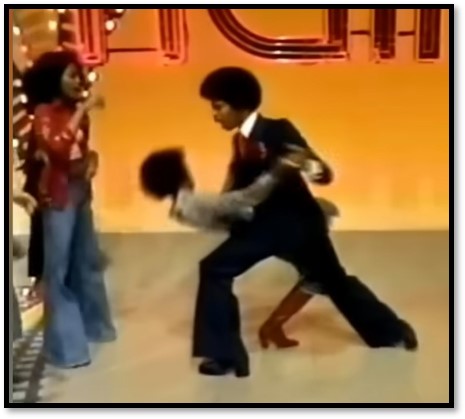
If one were looking for graphic examples of boundless attraction, cooperation, and respect that men and women are capable of expressing for each other, they would only have to reference any of the videos below depicting young couples engaged in completely uninhibited nonverbal communication, demonstrating the sheer joy and cherished appreciation for each other’s presence and differences in dance movement, a physical act that doesn’t require a PhD in psychology, a fat bank account, or elevated political and social status.
In a million years, I could never imagine hardcore fist-pumping feminists like Gloria Steinman or Bettye Naomi Goldstein (aka Betty Freidan) allowing themselves to experience this level of joy and pleasure with a member of the opposite sex, or even a member of their own sex. It’s not in their DNA and would betray feminist rhetoric.

American Bandstand Dance Contest 1967
Coda
What we are experiencing in this moment in history has nothing to do with justice, equality, or the rights of women and minorities. It is the steady and systematic erosion of society designed to pit men, women, races, and cultures against each other with the expressed goal of fostering chaos and division aimed at herding us into a social, financial, and medical neofeudalistic totalitarian technocratic control grid by any means necessary.
We are a species standing at the precipice of our future, staring down at humanity’s darkest hole. The choice to reject or except this maniacal globalist plan is ours and ours alone.